Hello, I'm Mog.
こんにちは、Mogです。
In Japan, Setsubun is celebrated on the day before "Risshun" (the first day of spring in the traditional Japanese calendar, marking the transition from winter to spring). In 2025, Setsubun falls on February 2nd.
日本では「立春(日本の伝統的な暦で春の始まりとされる日、冬から春への移り変わり)」の前日に節分という行事が行われます。2025年は2月2日が節分です。
What is Setsubun?
Since ancient times, Japanese people believed that evil spirits appeared during seasonal changes. Setsubun is a popular event where people drive away evil spirits (oni) and welcome good fortune (fuku). Oni are scary creatures from Japanese legends, characterized by their red or blue skin and horns.
古来より日本人は、季節の変わり目に悪(鬼)が出現すると信じていました。節分は悪いもの(鬼)を追い払い、幸運(福)を招き入れる行事として多くの方に親しまれています。鬼は日本の伝説に登場する赤や青の肌をした怖い生き物で、角が生えているのが特徴です。
Traditional Setsubun Practices
Bean Throwing
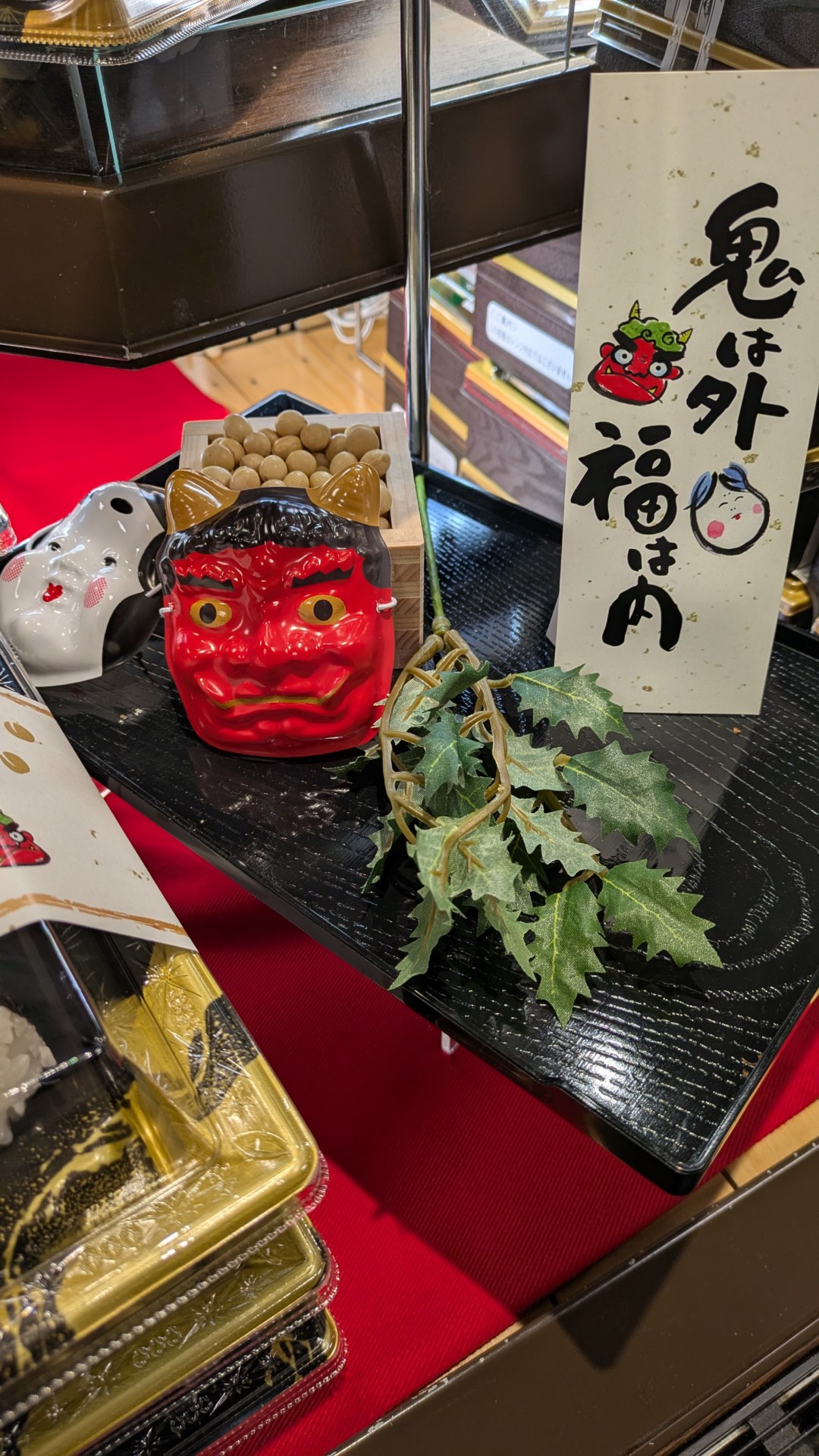
The most famous Setsubun tradition is "mamemaki" (a ritual of throwing roasted soybeans). All family members throw roasted soybeans outside while shouting "Oni wa soto!" (Demons out!), then throw them inside while saying "Fuku wa uchi!" (Fortune in!). These phrases are traditional words that have been passed down for hundreds of years.
最も有名な節分の伝統は「豆まき」(煎り大豆を投げる儀式)です。家族全員が「鬼は外!」と言いながら、炒った大豆を家の外に向かって撒きます。次に「福は内!」と言いながら、家の中に豆を撒きます。この掛け声は何百年も前から伝わる伝統的な言葉です。
Children's Bean-Throwing Experience
For young children, Setsubun is an especially fun event. At kindergartens and nursery schools (educational facilities for children aged 2-6), teachers dress up as oni, and children throw beans at them. At home, fathers often play the role of oni, and while children might be a little scared, they excitedly throw beans 😊
幼い子どもたちにとって、節分は特に楽しい行事です。保育園や幼稚園(2歳から6歳の子どもが通う教育施設)では、先生が鬼の仮装をし、子どもたちは鬼に向かって豆をまきます。家庭でも、父親が鬼に扮する事が多く、子どもたちは少し怖がりながらも興奮して豆をまきます 😊
Setsubun Beans with Masks
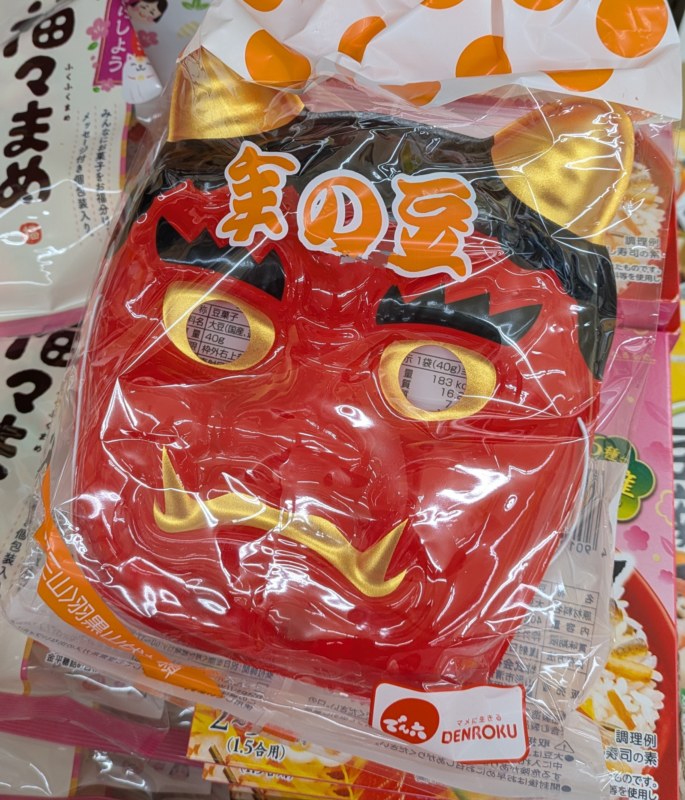
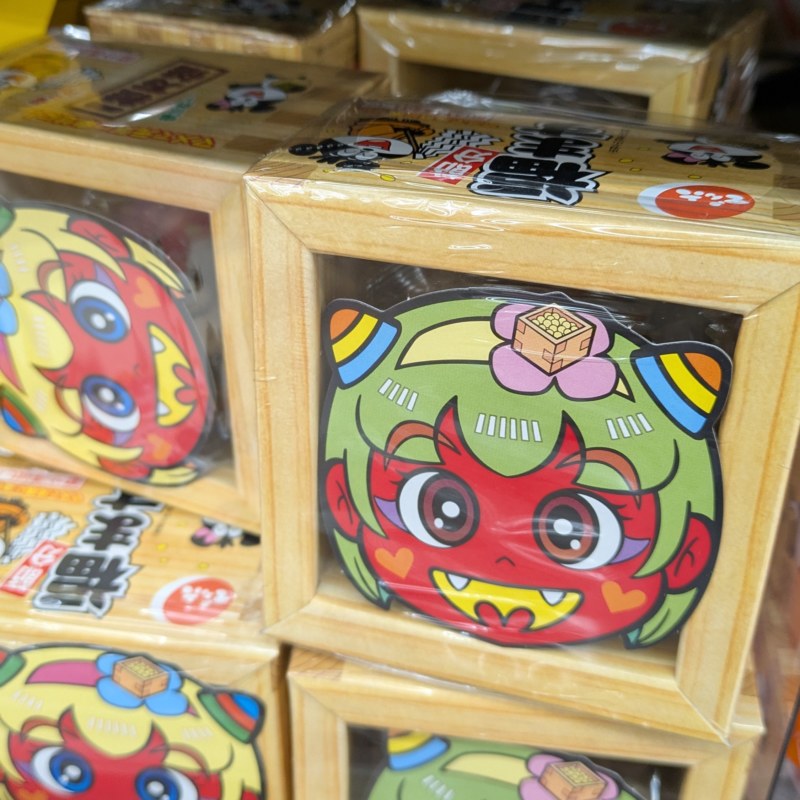
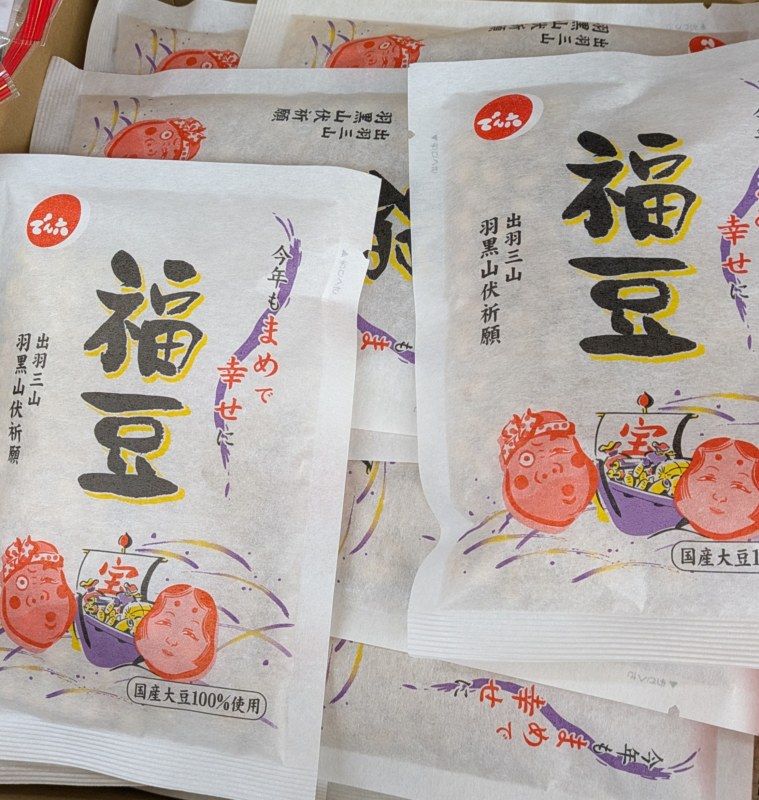
From mid-January, supermarkets start selling special Setsubun beans. The soybeans are rehydrated and roasted, making them delicious to eat as they are 👍 Some packages come with red or blue oni masks (masks) for those playing the demon role 😁
1月中旬くらいから、スーパーには節分用の豆が並びます。大豆は水で戻し、煎ってあるので、そのまま食べても美味しいです 👍
鬼を演じる人のために、赤や青の鬼のお面(仮面)もついたものもあります 😁
Eating the Beans
After the bean throwing, people eat beans equal to their age plus one, wishing for health and happiness in the coming year. For example, a 25-year-old person would eat 26 beans.
豆まきの後、「来年も健康かつ幸せに暮らせるように」という願いを込めて、豆を年の数+1つ食べます。例えば、25歳の人は26個の豆を食べます。
When I was young, I quickly finished counting my beans and helped count my grandmother's portion. I remember her saying, "I can't eat this many, so help me eat them too 😅"
幼い頃、私の豆はすぐに数え終わり、祖母の豆の数を数えるのを手伝いました。「こんなに食べ切れないから、食べるのも手伝って 😅」と祖母に言われたのを覚えています。
Regional Variations in Setsubun Customs
Warding Off Evil
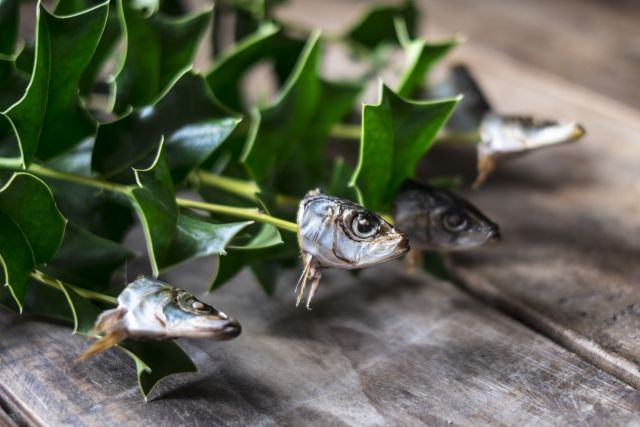
Setsubun customs vary slightly by region. At my house, we decorated the entrance with holly (a thorny evergreen) branches and sardines (small fish) as protective charms. It's believed that the holly's thorns can poke demons' eyes, and demons hate the smell of sardines.
節分のやり方は地方によって、少しずつ違います。私の家では玄関に魔除けとして、ヒイラギ(トゲのある常緑樹)の枝とイワシ(小魚)を飾りました。
柊の葉のトゲは鬼の目を刺す、いわしの臭いは鬼が嫌うと考えられているそうです。
Origins and Culture of Ehomaki
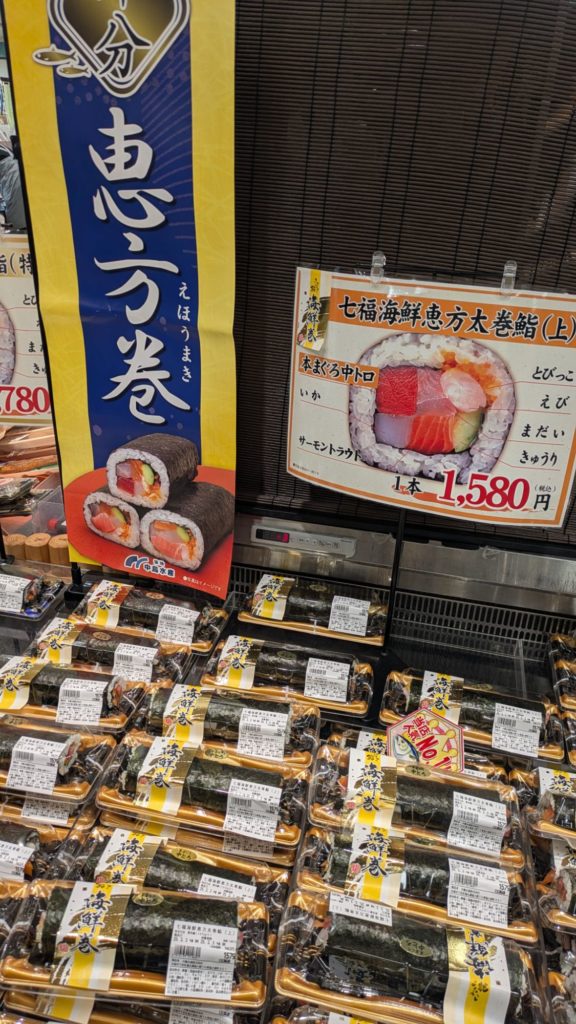
Around 2000, due to media influence and retail industry promotion, eating ehomaki (cylindrical sushi rolls wrapped in nori seaweed containing several ingredients) became a nationwide Setsubun tradition. While regular sushi rolls are usually cut into 1.5-2cm pieces, Setsubun ehomaki is eaten whole.
2000年くらいから、メディアの影響や小売業界の宣伝により、節分に太巻き寿司(海苔で巻いた円筒形の寿司で、中には具材が数種類入っています)を食べる風習が全国的な行事として定着しました。通常、太巻きは1.5から2cmくらいの厚さに切りますが、節分の時に食べる太巻きは切りません。
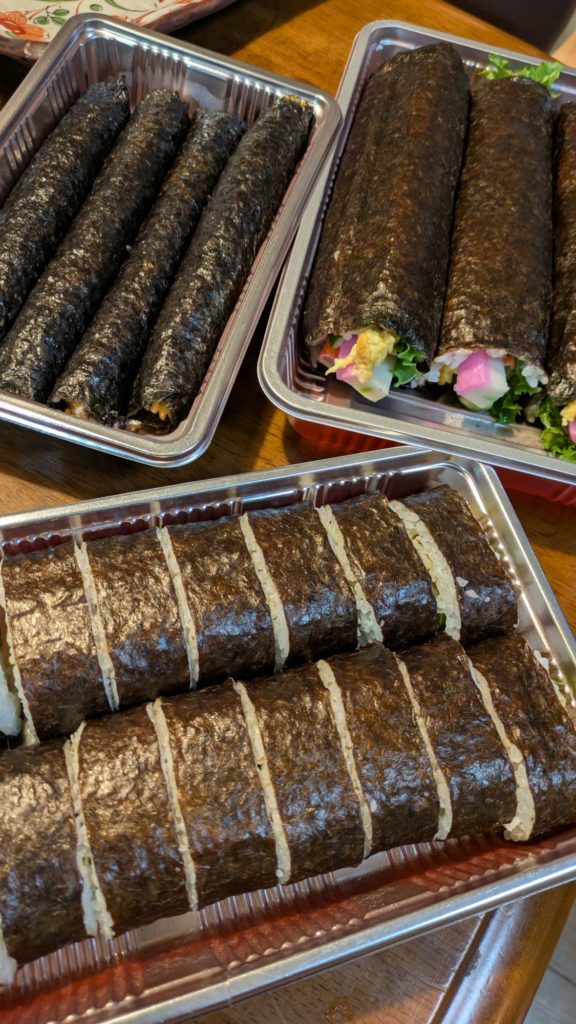
You eat the whole roll in silence while facing that year's lucky direction (eho). When family members all face the same direction and silently eat their rolls, it's such a strange sight that you have to hold back your laughter 🤭
その年の縁起の良い方角(恵方)を向いて、黙って太巻きを丸かじりするのです。家族揃って、同じ方向を向いて黙々と太巻きを口に入れる様子は、なんか不思議で、笑いそうになるのをグッと堪えて食べます 🤭
Setsubun Events
On this day, Setsubun events are held in many places. The Setsubun festival at Yoshida Shrine, an ancient shrine in Kyoto, is particularly famous and attracts many visitors. At shrines, monks and priests perform bean throwing ceremonies and rituals to bestow good fortune upon visitors.
この日は色んな所で節分のイベントが開催されます。京都の古くからある神社、吉田神社の節分イベントが有名で、たくさんの人が訪れます。神社では僧侶や神主が豆まきを行い、参拝者に福を授ける儀式が行われます。
May you stay healthy throughout the year.
Praying for your health,
"Oni wa soto! Fuku wa uchi!" (Demons out! Fortune in!) ✨
この1年、健康で暮らせますように。
あなたの健康を祈って
「鬼は外!福は内!」✨