Hello, this is Mog.
In Japan, once Christmas is over, we begin preparing for the New Year.
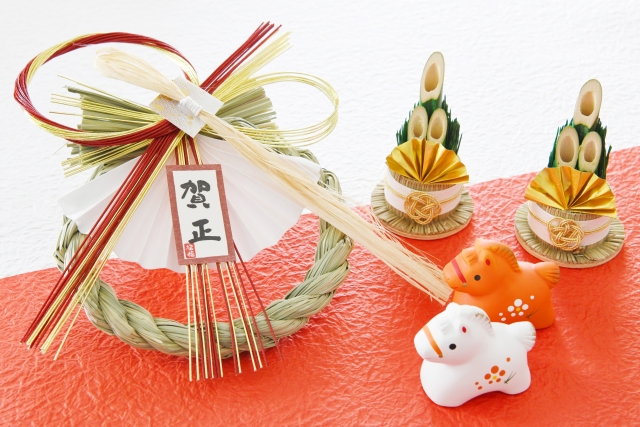
Today, I’d like to write about traditional Japanese New Year decorations.
こんにちは、Mogです。
日本では、クリスマスを終えるとお正月の準備をはじめます。今回は、お正月飾りについて書きますね。
The Meaning of New Year Decorations
New Year decorations in Japan are not just decorations.
For a long time, Japanese people have believed that a deity of the New Year comes to visit homes at the beginning of the year.
New Year decorations express hospitality and gratitude toward this deity.
お正月飾りは、単なる装飾ではありません。
日本では昔から、お正月に新年の神様を家に迎えると考えられてきました。
お正月飾りは、神様を迎えるためのおもてなしと感謝の気持ちを表しています。
When Do We Decorate for the New Year?
New Year decorations are usually put up by December 30.
However, December 29 is often avoided because it sounds like the word for “suffering” in Japanese,
and December 31 is considered too last-minute to prepare properly.
お正月飾りは12月30日までの間に飾ります。
ただし、29日は「苦」を連想させるため避けられることが多く、
31日は準備が直前すぎるとして、あまり好まれません。
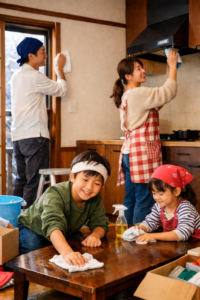
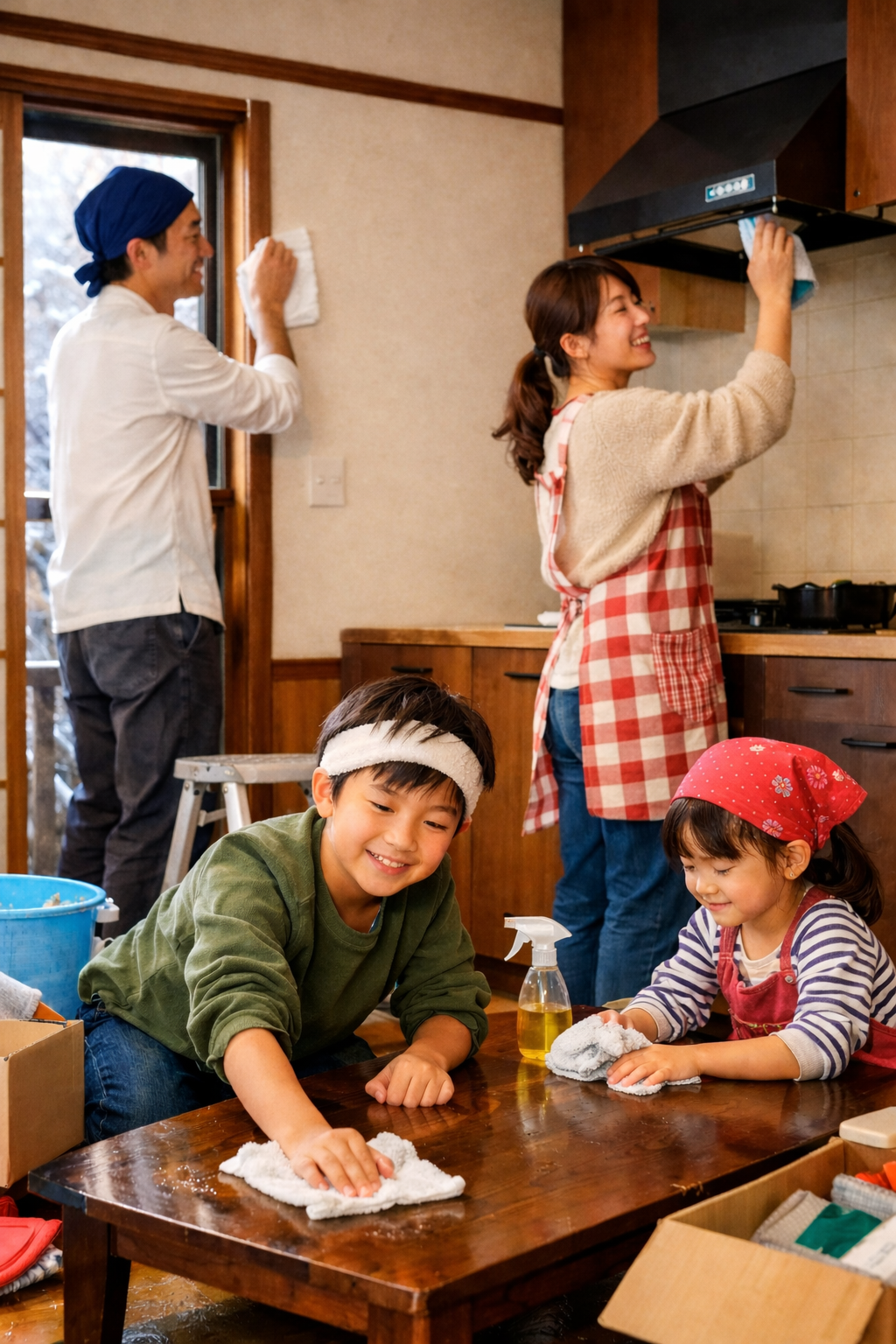
After putting away Christmas decorations, people usually do a thorough year-end cleaning before decorating.
I wrote about this cleaning tradition in a previous article, so please check it out if you’re interested.
クリスマス飾りを片付けた後、大掃除をしてから飾るのが一般的です。
大掃除については、前回の記事に書いたので、良かったら読んでくださいね。
Typical New Year Decorations
Let me introduce some of the most common New Year decorations in Japan.
お正月飾りの代表的なものを紹介しますね。
Shimenawa Decorations
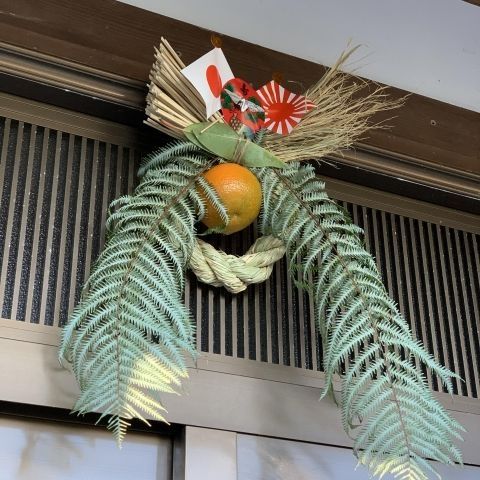
Shimenawa are decorations made from rice straw and are often hung on entrance doors.
I remember joining a shimenawa-making workshop hosted by elderly neighbors when I was a child.
Here is a video showing how to make shimenawa.
しめ縄は、藁(わら)で作られた飾りで、玄関のドアなどに飾ります。
子どもの頃、近所のお年寄りが開催するしめ縄作りのワークショップに参加したのを覚えています。
しめ縄の作り方動画を紹介しますね。
Recently, decorative wreath-style shimenawa with colorful designs have also become popular.
最近では、華やかにアレンジをしたリース風のしめ縄飾りも見かけるようになりました。
Kagami Mochi
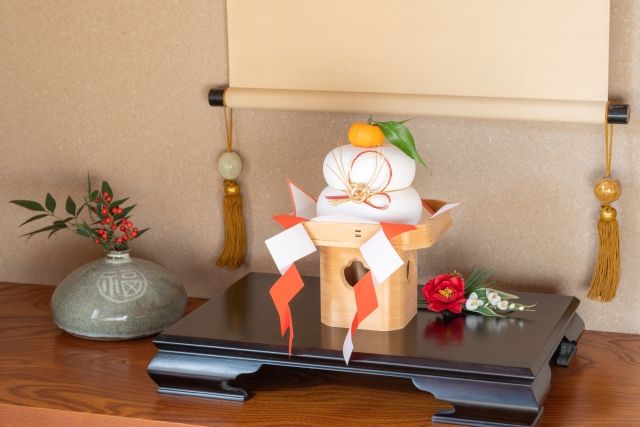
Kagami mochi is a New Year decoration made of two round rice cakes stacked on top of each other.
The items placed with kagami mochi also carry meanings such as longevity and prosperity of descendants.
When I was a child, my father used to explain these meanings while decorating.
鏡餅は、丸いお餅を二段に重ねたお正月飾りです。
長寿や子孫繁栄など、鏡餅と共に飾られる物にもさまざまな意味が込められています。
子どもの頃は、父が鏡餅を飾りながら意味を教えてくれました。
Last year, I had the chance to make kagami mochi and rice cakes eaten during the New Year at a friend’s house.
昨年は友人の家で、鏡餅やお正月の間に食べるお餅を作らせてもらいました。
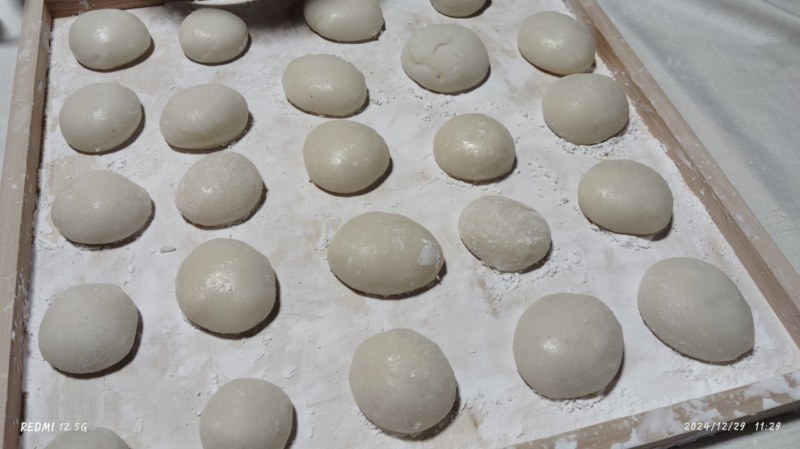
Although customs vary by region, kagami mochi is usually broken and eaten on January 11.
It becomes very hard by then, so breaking and eating it can be quite a challenge.
These days, many supermarkets sell kagami mochi-shaped containers with vacuum-packed rice cakes inside,
and that’s what we decorate with at my home.
鏡餅は地域によって違いますが、1月11日に割って食べます。
かなり硬くなっており、割るのも食べるのもちょっと大変。
最近は鏡餅の形をした容器の中に真空パックのお餅を入れた物もスーパーで販売されていて、
私の家ではそれを飾る事にしています。
Zodiac Decorations

Many households decorate with animal ornaments representing the zodiac of the year.
Since 2026 is the Year of the Horse, we will decorate with a horse figurine.
The zodiac system came from ancient China and uses twelve animals to represent years.
干支という、その年を象徴する動物をモチーフにした飾りを飾る家も多いと思います。
2026年は馬の年なので、馬の置物を飾ります。
干支は、古代中国から伝わった考え方で、12種類の動物を使って年を表します。
The order of the zodiac animals is as follows:
順番は以下の通りです。
- Rat
- Ox
- Tiger
- Rabbit
- Dragon
- Snake
- Horse
- Sheep
- Monkey
- Rooster
- Dog
- Boar
- 子(ね):ねずみ
- 丑(うし):牛
- 寅(とら):虎
- 卯(う):うさぎ
- 辰(たつ):龍
- 巳(み):へび
- 午(うま):馬
- 未(ひつじ):羊
- 申(さる):猿
- 酉(とり):鳥
- 戌(いぬ):犬
- 亥(い):いのしし
My father enjoys wood carving as a hobby, and every year he makes a figurine of the next year’s zodiac animal.
父は木彫が趣味なので、毎年来年の干支の置物を作ります。
See you again next time!
では、また次回お会いしましょう!